No. 01 · · 2 min read
Unraveling Data Challenges at Every Phase of Humanitarian Crises
Data needs stay the same from one phase of a crisis to the next. So why does the data challenge look so different each time?
The idea
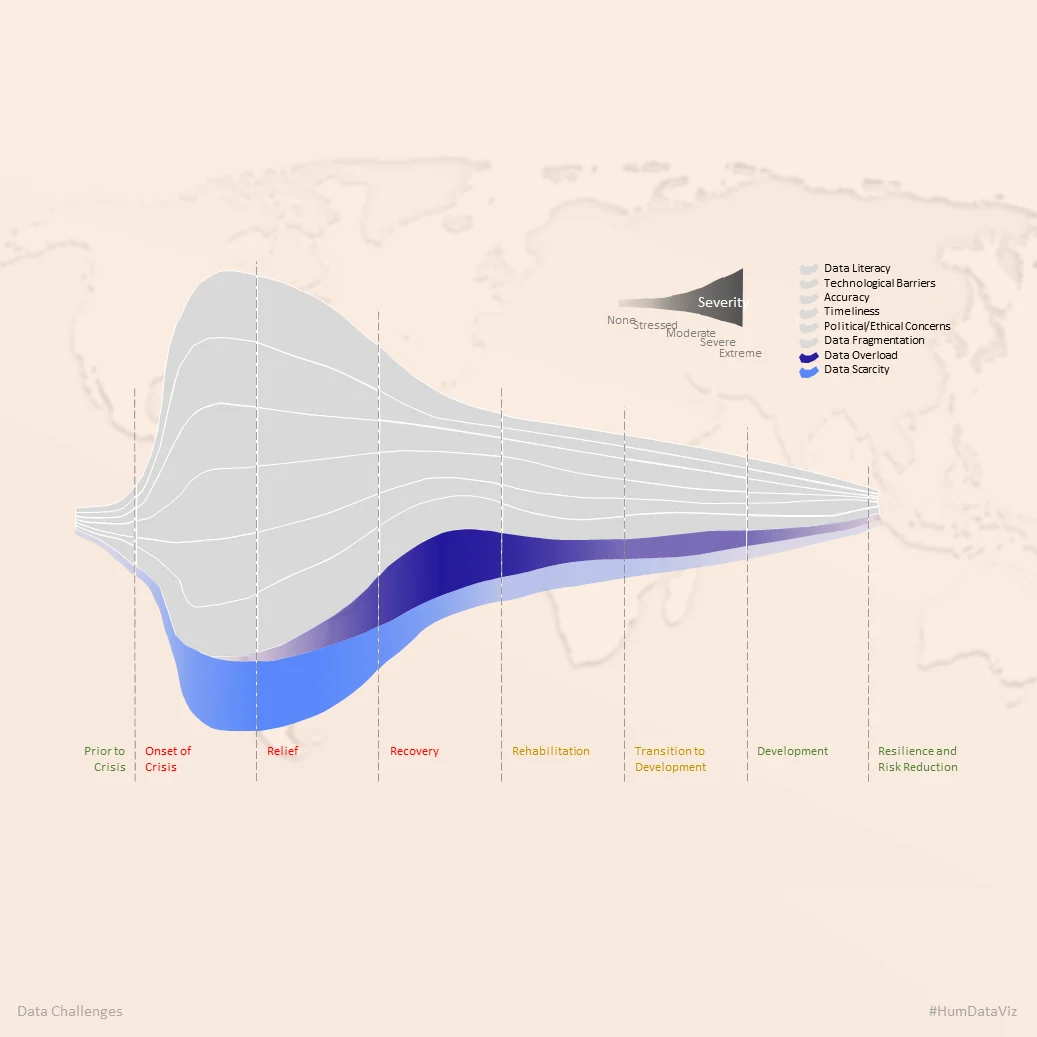
The need for data is constant; the challenge is not. Data Scarcity at the onset gives way to Data Overload as the crisis unfolds, so each phase needs its own approach.
01
Scarcity at the onset
When a crisis begins, the need for data is already there, but the data is not.
02
Overload as it unfolds
As the crisis goes on, the challenge flips from too little data to too much.
03
Adapt in real time
Each phase needs a tailored data approach, adjusted as the situation changes.
Data management isn’t a one-size-fits-all solution in humanitarian response.
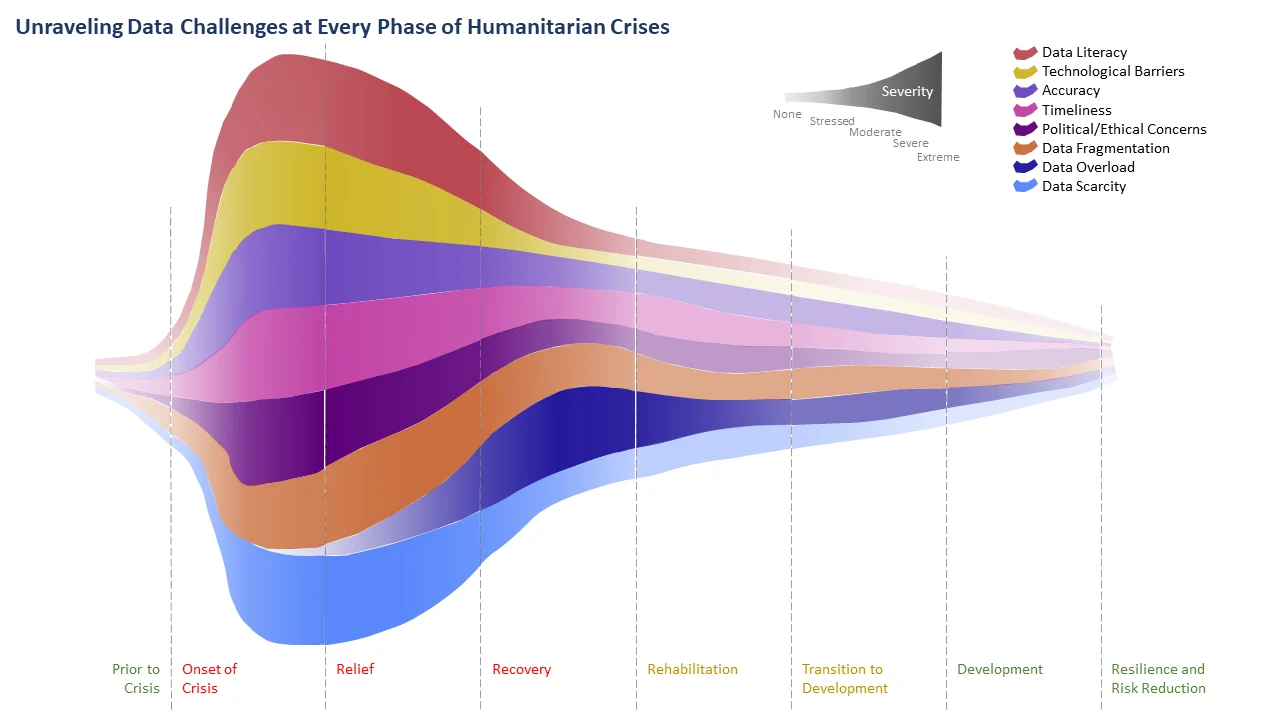
Humanitarian crises are complex, and one thing that remains constant across every phase is the need for reliable, timely data. But here’s the catch: each phase presents its own unique data challenges, from Data Scarcity at the onset of a crisis to Data Overload as the situation unfolds. And let’s be honest - managing these challenges is no easy task.
Every phase of a humanitarian crisis requires a tailored approach to data, and the severity of these challenges can range from mild annoyances to extreme roadblocks. That’s where things get tricky - and interesting.
To illustrate this, I’ve created a visual (see the graph) that highlights how these data challenges fluctuate across the different phases of a crisis. Each phase presents its own hurdles, and the graph shows you just how intense these challenges can get.
Key Takeaway?
Data management isn’t a one-size-fits-all solution in humanitarian response. It’s about recognizing the specific challenges at each phase and adapting to them in real-time.
So, what’s been your biggest data challenge in a crisis? Have you experienced the overwhelming flood of data during an emergency, or struggled with data scarcity while trying to prepare for the next disaster? I’d love to hear your thoughts - drop your experiences in the comments!
Stay Tuned!
This is just the beginning! In the coming weeks, I’ll be diving deeper into each data challenge - breaking down not just what they are, but how to effectively tackle them at each phase of a humanitarian crisis. I’ll be sharing insights to help navigate these hurdles. So, keep an eye out for updates and more visuals that will guide you through solving these complex challenges. Stay tuned!
Excited to hear your thoughts! If you'd like to jump into the discussion or share your insights, just follow this link, and let’s keep the conversation going:
https://www.linkedin.com/pulse/unraveling-data-challenges-every-phase-humanitarian-alen-chalak-pmp-kusvf/?trackingId=c2X0XjWnQc%2Bg9GPou8dkgA%3D%3D